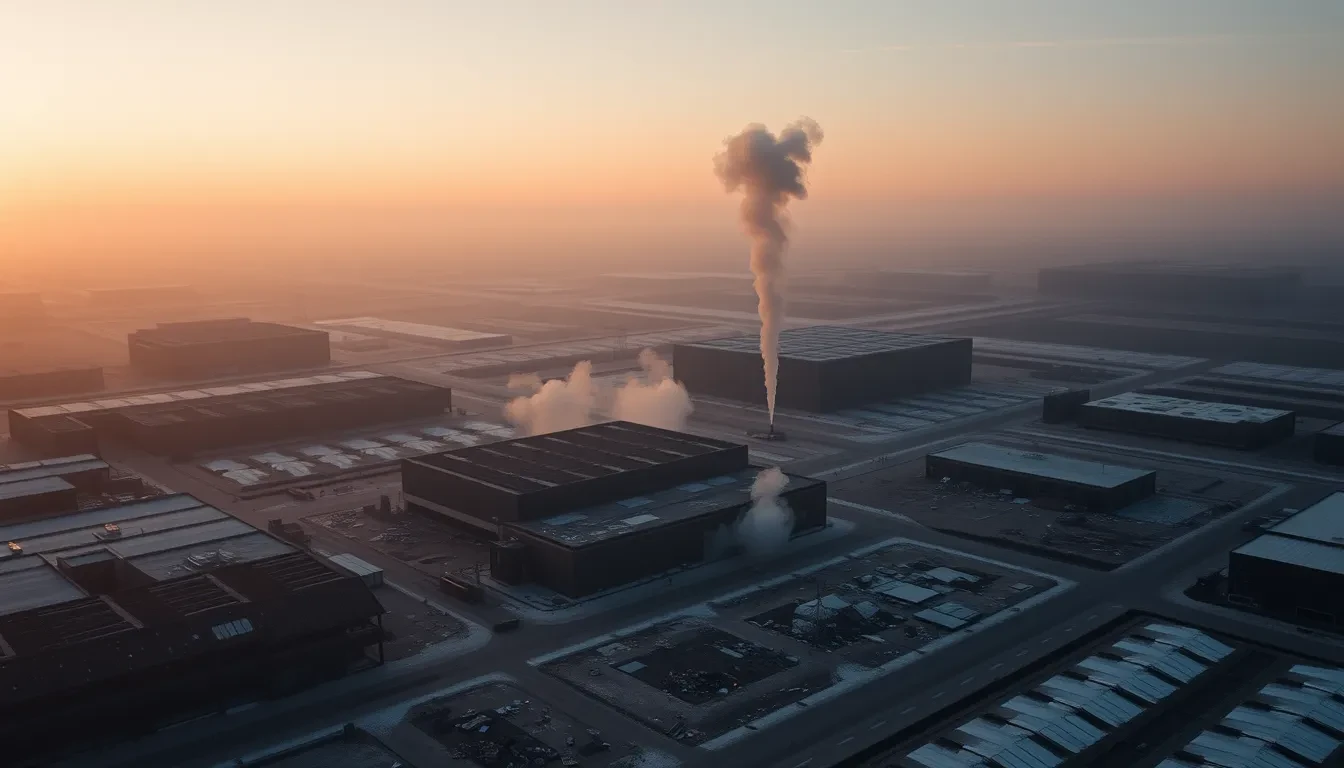
Russia's biggest technology company spent the past week watching its AI backbone come apart. Between October 8 and October 11, Ukrainian drones struck three Yandex data centres, and by the weekend the company had suspended operations at the last of them.
The run of strikes started on October 8 at Sasovo, in the Ryazan region, a site that has operated since 2014 and houses two of Yandex's supercomputers, Chervonenkis and Lyapunov. A second hit landed on October 9 at Kaluga, which the company said was partly put out of action; the regional governor reported nine people injured. The third came on October 11 at Vladimir, home to the company's third supercomputer, Galushkin.
What Yandex has confirmed
Yandex has been careful about what it will say. In a Telegram service alert about the Vladimir site, it told users: "Operations at the data centre have been completely suspended." It advised customers to activate disaster-recovery plans, described the platform as running in emergency mode, and warned that "the remaining resource configuration is considered unstable." No injuries were reported there.
On the machines themselves, the company has said less. It declined to confirm whether the Sasovo strike damaged the two supercomputers at that site, or whether the equipment can be restored. The official statements cover buildings and services, not silicon.
Reports go further than Yandex will
Others have filled the gap, and their claims should be read with that in mind. According to media accounts, all three Yandex supercomputers are now offline. The independent outlet T-Invariant reported on October 11 that the strikes may have taken out half of the six largest supercomputing systems in Russia. Fire Point, the Ukrainian drone maker, said the Vladimir facility was forced completely offline, a claim from a party to the war rather than a verified fact.
The service impact was easier to see. Reports counted at least 84 disrupted services, with Yandex Cloud customers including banks, marketplaces, delivery apps, pharmacies and the website of St Petersburg's Pulkovo Airport affected. Cloudflare data showed Yandex bot traffic collapsing to a fraction of its recent two-week peak.
Compute as a target
President Zelenskyy framed the attacks as retaliation for Russian strikes on Ukrainian digital infrastructure. "We always respond in mirror-like fashion," he said after the Sasovo hit. Whatever the military logic, the week marked something worth noting for the wider industry: large concentrations of AI compute are now being treated as strategic targets.
That reframes a lot of the recent conversation about scale. The hundreds of billions in compute commitments that frontier labs are signing, and the memory shortage stretching to 2028, all assume the data centres stay standing. For a week in October, three of Russia's did not.
Commentarii · 0