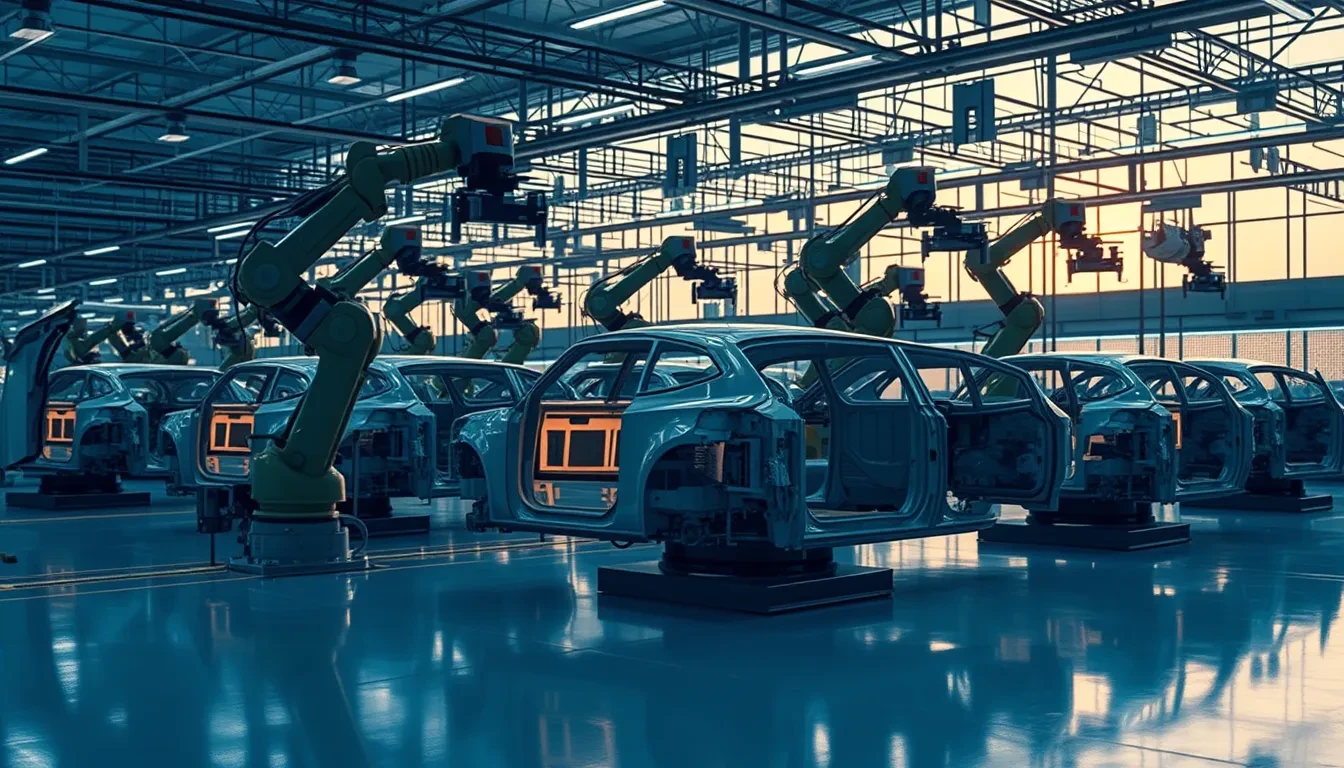
South Korea has cleared the way for humanoid robots to work alongside people on live production lines, a first for a country that builds much of the world's advanced manufacturing equipment. On Monday the regulatory sandbox committee of the Ministry of Trade, Industry and Energy approved a demonstration project that will put 20 bipedal humanoids to work at four industrial sites, covering semiconductors, cars, shipbuilding and logistics.
The approval matters because of what it sets aside. South Korea's existing safety rules were written for industrial robots that stay fixed in place, fenced off from human workers. Those rules had made it effectively impossible to deploy a walking machine that shares the same floor as people. The sandbox grants a temporary exemption so the robots can be tested in real conditions, subject to risk assessments, with the results feeding into a revision of the standards themselves.
Four floors, four jobs
The project was submitted by a consortium of five companies, among them the robotics firm Robros, and names four host sites. At the chip packaging company Nepes, the robots will clean semiconductor components. At the auto parts maker Sungwoo Hitech, they will seat body panels into position. At the shipbuilder HD Hyundai Samho, they will stack scaffolding brackets against ship hulls, one of the more physically awkward tasks in a yard. At Delivery Lab, they will haul refrigerated packaging.
The common thread is dull, heavy, repetitive work in settings where a stray movement near a human carries real risk. That is precisely the environment regulators have been cautious about, and the point of a pilot is to gather evidence rather than assume it. The committee framed the clearance as a demonstration, not a rollout, and whether it widens will depend on how the trials go.
A test of the thing people worry about
The announcement lands in the middle of a long argument about how close humanoid robots really are to useful work. Plenty of the excitement has outrun the evidence, and the gap between a slick demo video and a reliable shift on a factory floor remains wider than the marketing suggests. Cost is the other hard constraint: for many physical jobs, the economics of a humanoid still do not add up against human labour.
What South Korea's sandbox offers is something the debate has lacked, which is data gathered under rules rather than in a showroom. If the robots prove they can keep pace and stay safe beside the people they work next to, the standards will be rewritten to let more of them in. If they stumble, that will be on the record too. Either way the country has chosen to find out in public.
Sources
- i. en.sedaily.com
- ii. www.khan.co.kr
- iii. www.mlex.com
Commentarii · 0