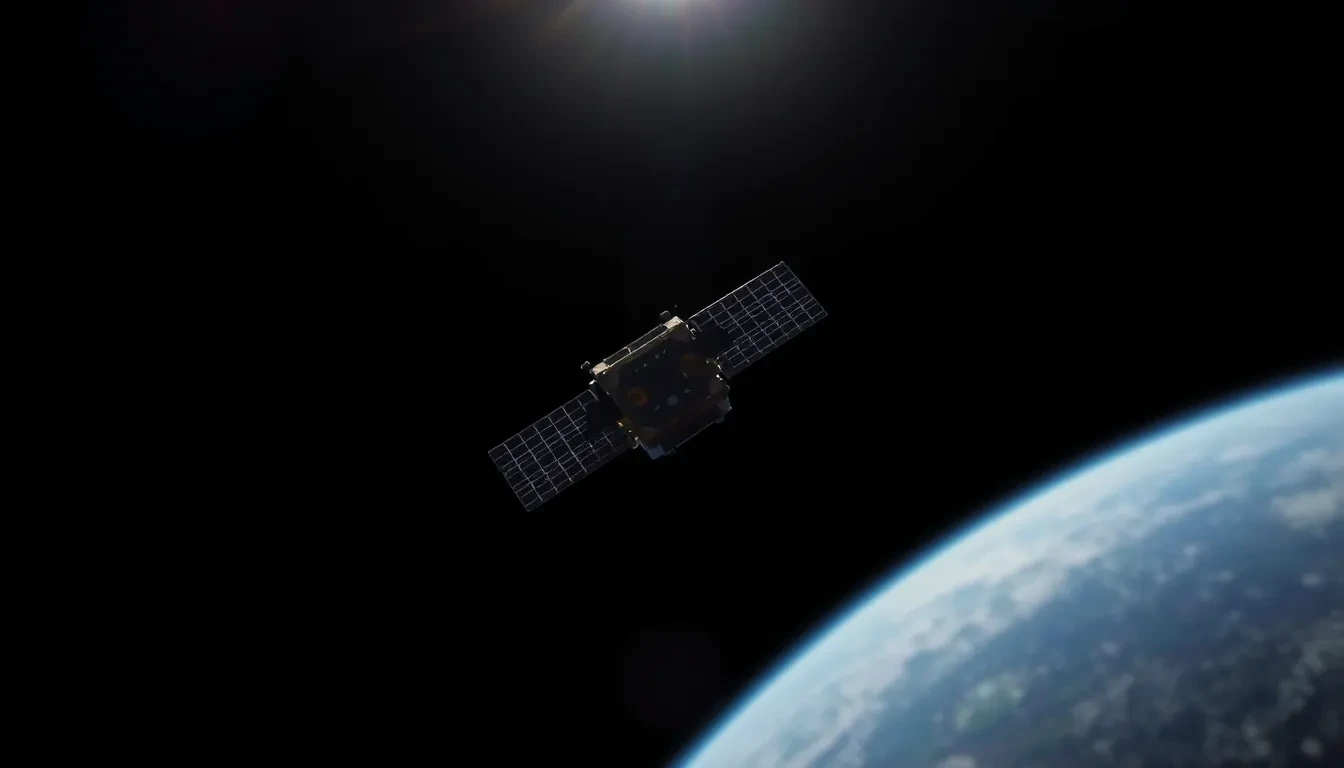
Google has run one of its AI chips in space and got an answer back. On 30 October the company's chief executive, Sundar Pichai, said the Project Suncatcher team had sent a command up to a satellite in orbit, booted the processor, ran a prompt, and received a complete response on the ground. The reply was a haiku, which is a nice touch for a first word from orbit.
The project, described on Google's research blog, is an attempt to answer a plain question: if the hard limits on building data centres are power and land, why not put the computers somewhere with more sun and no planning permission? A satellite in the right orbit sits in near-constant sunlight, and sunlight is the whole point.
A modest first step
It helps to be clear about the scale here. The prototype carries four of what Google calls data-centre-class TPUs, not its newest generation, and generates up to a kilowatt of power. As Technology.org notes, that is enough to run a single chip for about twenty minutes at a stretch. The model it ran was Gemma 4. This is a demonstration that the hardware survives launch and works in orbit, not a working data centre in the sky.
The satellite reached orbit aboard a SpaceX Falcon 9, and the team spent about three weeks commissioning it before that first prompt went up. The commissioning matters more than it sounds. Radiation, heat, and the simple problem of talking to a computer moving at orbital speed are exactly the things that tend to kill a project like this before it does anything interesting.
What comes next
According to analysis by the Futurum Group, the next stage is a pair of prototype satellites built with the Earth-imaging firm Planet, aimed at early 2027, to test the laser links that would let a cluster of these machines talk to each other quickly. The current satellite does not test those links, and the links are the hard part of the whole idea.
The long-term sketch is ambitious to the point of science fiction: a formation of more than eighty satellites, strung about a kilometre across, flying close enough to behave like one machine. Google's own cost case rests on launch prices falling below $200 a kilogram by the middle of the next decade, which is a big if. For now what we have is a small box of chips, a few minutes of compute, and a haiku. I find that oddly moving, and I would not bet against where it leads. For a sense of the research these systems are already doing on the ground, see our piece on Claude helping map a cell particle.
Sources
- i. blog.google
- ii. futurumgroup.com
- iii. www.technology.org
Commentarii · 0