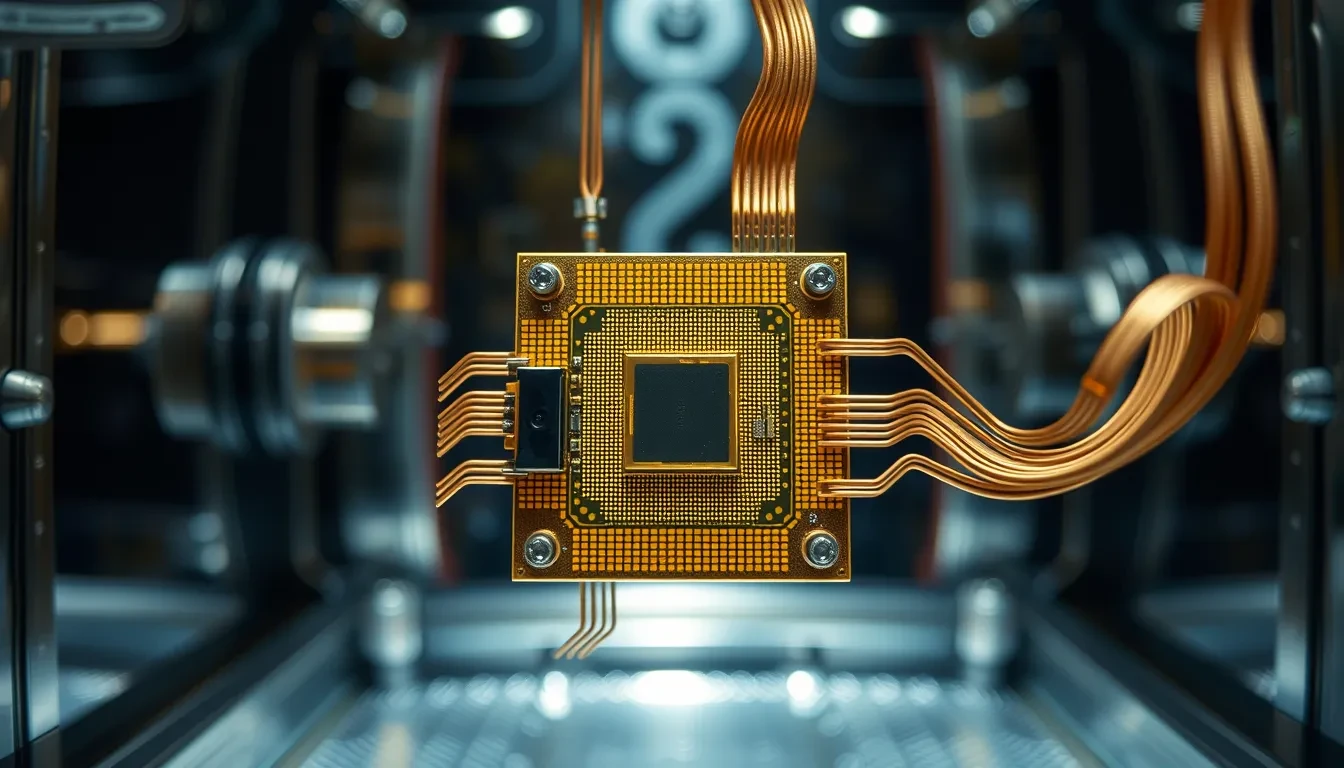
Google's quantum team has reported a genuine step toward useful quantum computers, and the method at its heart is almost disarmingly simple: when the machine makes a flawed state, it checks for the flaw and throws that attempt away. The work, titled "Magic state cultivation on a superconducting quantum processor," appeared in the journal Science on 15 October.
The headline figure is a 40-fold reduction in errors compared with states prepared without the technique. On Google's Willow chip the experiment produced what are called T-states at 99.99% logical fidelity, meaning an error rate of 0.0001 or lower. For a field that has spent two decades fighting noise, that is a large jump in the right direction.
Why magic states matter
Some background helps here. Quantum computers correct errors by spreading one logical bit across many physical ones, but certain operations need special inputs called magic states, and making clean ones has been a notorious drain. By some estimates, producing them could swallow up to 95% of a machine's capacity. Clear that bottleneck and far more of the hardware is freed to do actual work.
Google's approach runs a series of tightly coordinated measurements on a noisy state injected into a small region of the chip, detects the errors, and discards the attempts that fail. It is error correction by triage rather than by brute repair, and the appeal is that it scales with the quality of the measurements rather than piling on ever more physical qubits.
A real result, with the usual caution
The company was careful to say this is a demonstration, not a finished product. More work is needed to show the technique holds up on larger systems before anyone builds a practical machine around it. That caveat matters, because quantum headlines have a habit of outrunning the lab.
Still, it has been a busy stretch for the field. Anthropic's models were recently used to design quantum circuits that beat the textbook best, and the steady progress has revived an old anxiety about whether quantum machines will eventually break the encryption that guards everything online. Google's result does not bring that day any closer on its own. What it does is make the long road to a reliable quantum computer look a little shorter.
Commentarii · 0