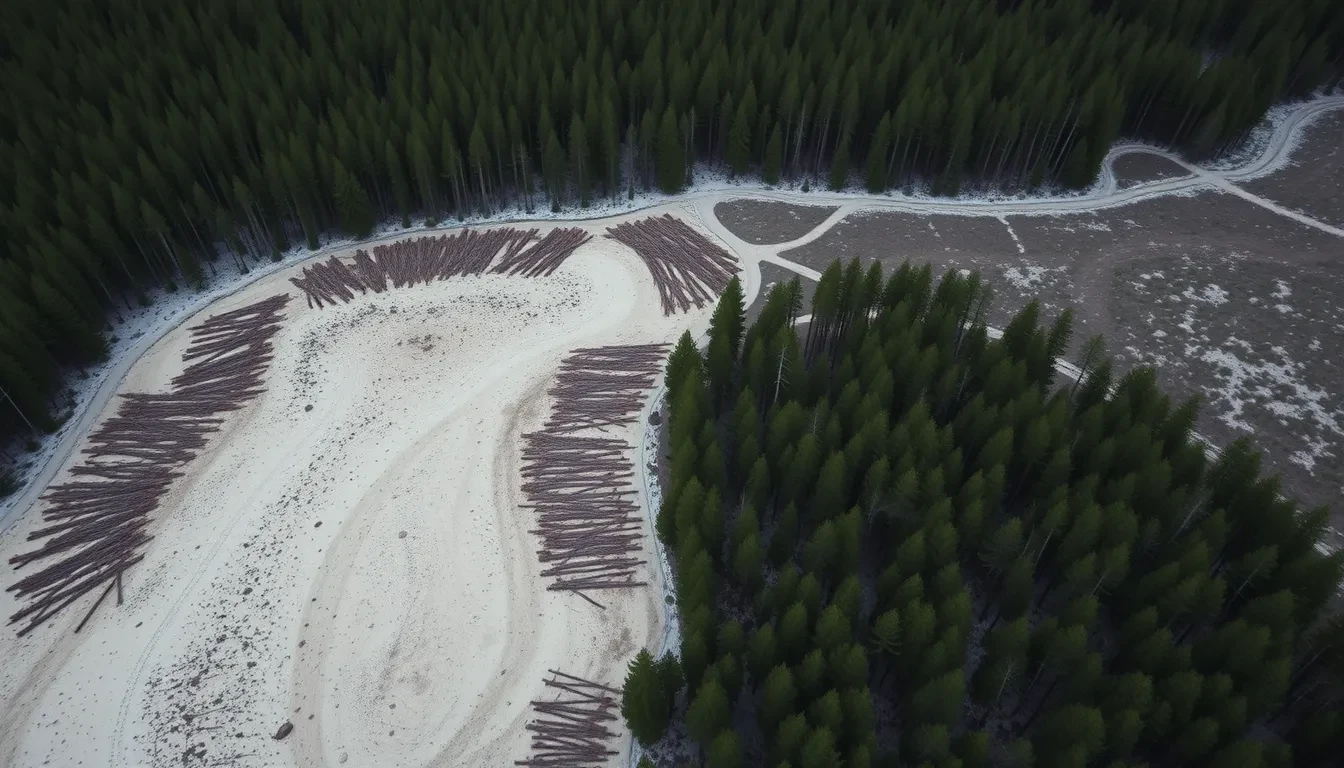
Google wanted a data centre in northern Finland. To build it, a contractor cleared roughly 330 hectares of forest near the town of Muhos. The trees came down before anyone completed the environmental impact assessment that Finnish law requires, and this week the project is stalled while the country works out what to do about it.
The land was being prepared for Tuike Finland, Google's local subsidiary. According to reporting by the Finnish broadcaster Yle and the newspaper Kaleva, the company tried to avoid the assessment altogether, asking regulators through the consultancy Ramboll to rule that no full review was needed. Authorities notified the project in May that an assessment was in fact required. The logging carried on into August.
The response on the ground has been sharp. The municipality of Muhos has withdrawn from the data-centre project, an unusual step for a rural council that stood to gain investment and jobs. Felling a forest without the review that was supposed to precede it has become the kind of story a company cannot easily manage, because the sequence is simple and the trees are already gone.
A second front over the power bill
The environmental dispute is not the only thing holding the project up. Alphabet has told the Finnish government that its wider data-centre plans are on hold while it waits to see what happens to a proposed tax change. Finland is weighing a rise in the electricity tax on data centres from 0.05 cents to 2.19 cents per kilowatt hour. That is roughly a fortyfold increase, and for a business whose single largest input is power, it is not a rounding error.
Google has said, in public consultations, that predictable rules and stable operating conditions weigh heavily in where it chooses to invest. Read plainly, that is a company reminding a government that data centres can be built elsewhere.
Finland is attractive to this industry for good reasons. The climate is cold, which cuts cooling costs, and the grid carries a lot of clean power. But the episode shows the strain the AI build-out puts on the places it lands in. The demand for computing has a physical footprint, in cleared land and in contested electricity, and local institutions are starting to push back on both. We have written about the pressure these facilities put on the grid and the way the same hunger for hardware is reaching into consumer prices.
For now the forest near Muhos is the part that cannot be undone. The tax question may yet be negotiated. The assessment will eventually be carried out. The 330 hectares are a decision made in the wrong order, and no review completed after the fact will put them back.
Sources
- i. yle.fi
- ii. futurism.com
- iii. www.datacenterdynamics.com
- iv. www.kaleva.fi
Commentarii · 0