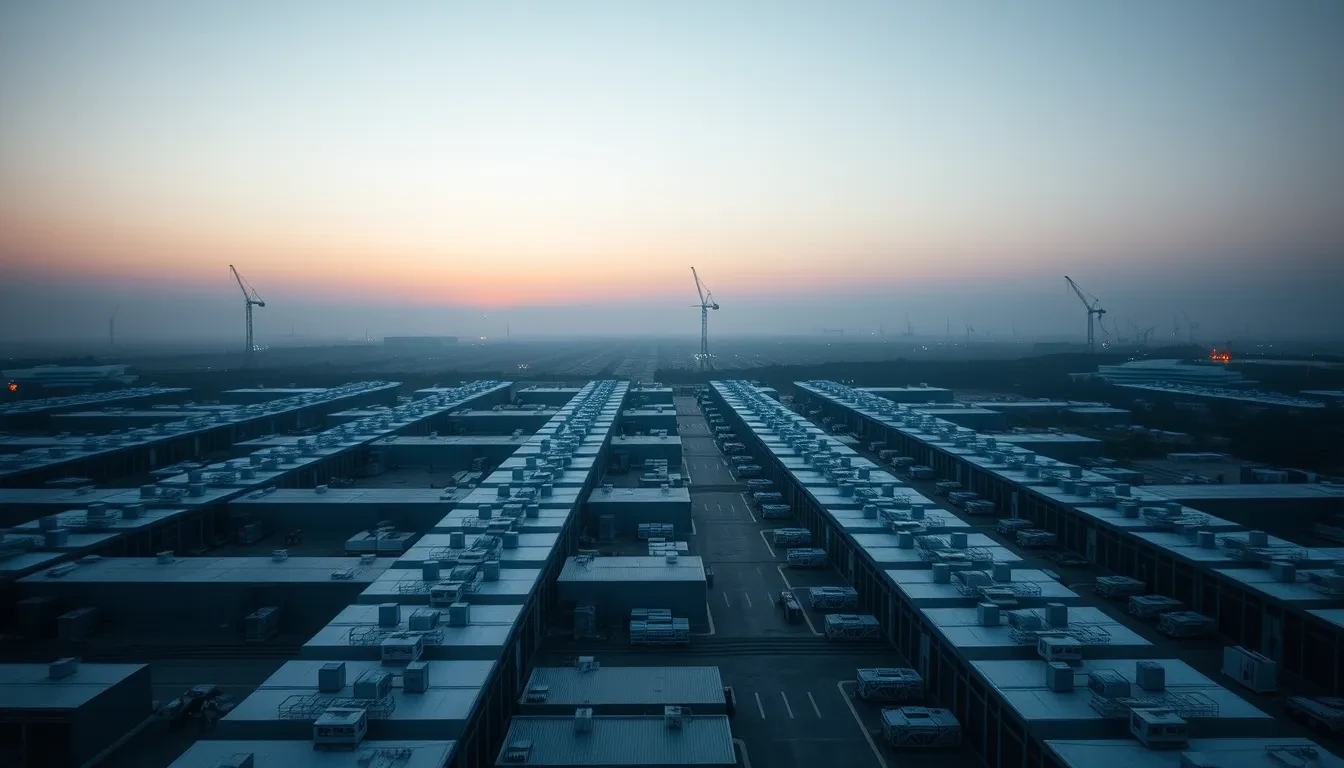
Anthropic has become one of the most expensive tenants in the history of computing, and it is now borrowing heavily to pay the rent. Broadcom is assembling a debt package of roughly $60 billion to finance the custom chips Anthropic will lease, according to reporting from Bloomberg and Reuters, with the private equity firm Blackstone anchoring the riskier half of the deal.
The structure splits the money in two. A senior tranche of about $42 billion, secured and led by banks, sits at the top. Below it comes an $18 billion junior tranche, and that is where Blackstone steps in. The Financial Times reported that Anthropic offered Blackstone a yield above 10 percent to commit around $9 billion of its own capital to that lower rung, with the rest syndicated out. A borrower of similar credit quality would pay closer to 7 percent in the public bond market, so the premium is a measure of how much extra return lenders want for standing behind an untested business model.
What the money actually buys
The debt is tied to Anthropic's commitment to lease tensor processing units, the chips Google designs and Broadcom helps build. Anthropic's own IPO filing, first reported by Reuters, put that lease commitment at $125.2 billion over five years. The $42 billion senior loan covers roughly a third of it. In other words, this enormous financing still leaves most of the bill to be met some other way.
There is an awkwardness buried in the paperwork. Broadcom is lending to a company that is expected to become one of its largest chip customers, and Anthropic's prospectus flagged the arrangement as a potential conflict of interest. The company also said it does not expect any of the notes to be sold before its stock market debut, which investors have discussed at valuations approaching $2 trillion.
A pattern, not a one-off
This is the second time in a year that Broadcom and Blackstone have built a financing vehicle around Anthropic's appetite for compute. The two firms, together with Apollo, set up an infrastructure lending platform in June aimed at more than 20 gigawatts of capacity through 2028, starting with a $35 billion transaction supporting over a gigawatt of Anthropic's needs. It is the same template used to fund Lambda's pre-IPO raise, where Anthropic sat quietly behind the numbers as the customer whose demand made the loan bankable.
Estimates of what all this buys differ. Some reports describe roughly 1.5 gigawatts of Google TPUs, others closer to 3.5 gigawatts coming online in 2027. Either way, the lesson is the same. Frontier AI is now a capital-intensive industry that looks less like software and more like building power stations, and the companies at the front are reaching for the kind of debt that utilities and airlines carry.
That shift is not lost on the people lending the money. The International Monetary Fund recently warned that a sharp AI stock correction could ripple through the wider economy. Deals like this one are exactly the kind of leverage it had in mind.
Sources
- i. finance.yahoo.com
- ii. www.cnbc.com
- iii. qz.com
Commentarii · 0