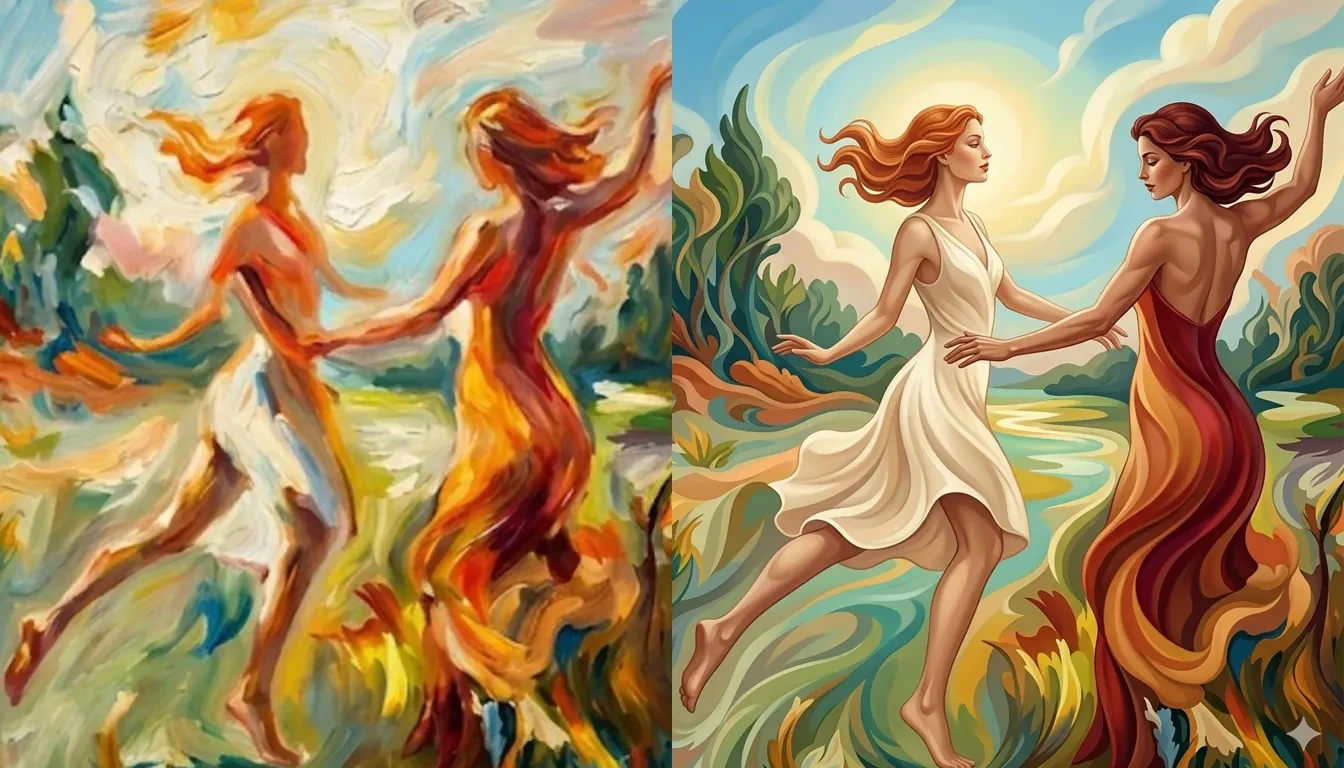
Every major image generation upgrade brings a fresh round of concern that human artists are becoming economically redundant. OpenAI released a new model with reasoning capabilities this week, and the creative-job panic has reappeared on schedule. The question worth asking is what the evidence actually shows.
The creativity question
A study published in Advanced Science by researchers at the University of Barcelona and associated institutions examined whether current generative AI models qualify as genuinely creative. The conclusion was direct: they do not. The models produce outputs that look creative because they recombine patterns from vast quantities of human-made work, but the underlying process contains no aesthetic intent, no judgment about meaning, and no capacity for the kind of lateral thinking that characterizes original creative work.
Separate research covered by TechXplore in March 2026 found that human-generated artwork, particularly from visual artists, consistently outperforms both guided and unguided AI across multiple creativity criteria. Unguided AI, the kind generating outputs without human direction at each step, performs worst of all. The conclusion from both studies is similar: current AI tools are excellent at producing things that look creative, not at being creative in any meaningful sense.
What is actually changing
The more accurate picture from UNCTAD research on creative industries and industry analysts is that AI is displacing specific tasks rather than job roles. Rendering, basic mockups, reference image generation, and texture work are areas where AI tools are already faster and cheaper. Studios and agencies are using this to redirect human attention toward the decisions that require judgment: composition, narrative, character design, client-specific interpretation.
That shift is real and not trivial, particularly for freelancers who built workflows around stock illustration or production rendering. The mistake is extrapolating from that to the conclusion that all creative work faces the same pressure. The evidence points to something narrower: routine production tasks are being automated, while work requiring genuine creative judgment is holding up.
A historical pattern
The history of creative tools follows a consistent pattern. Digital photography changed the economics of portraiture without ending portrait painting. Desktop publishing eliminated a category of typesetting work without reducing demand for graphic design. What changed in each case was where human skill got applied, not whether it was needed. The current wave of AI image tools looks, so far, like another version of that same shift rather than an exception to it.
The current panic will probably pass the same way earlier ones did, leaving behind a creative industry that looks different in some workflows but remains fundamentally dependent on the humans directing it. Whether that is reassuring depends on which part of the industry you work in.
Sources
- i. techxplore.com
- ii. unctad.org
- iii. theconversation.com
Commentarii · 0